

Floyd Mayweather, with his undefeated record, exceptional endurance and masterful boxing skills, follows a unique and highly adaptable training routine that’s effective, intensive, and at times unconventional. His principles offer valuable insights for fighters aiming to enhance their endurance, power, and strategic performance in the ring.

Mayweather’s work ethic and discipline are legendary, and his training routines reflect that. Based on interviews with Mayweather at the end of his career, his general fitness and boxing training routine, outside of his fight camp looked like this:
Floyd Mayweather’s Daily Training Routine
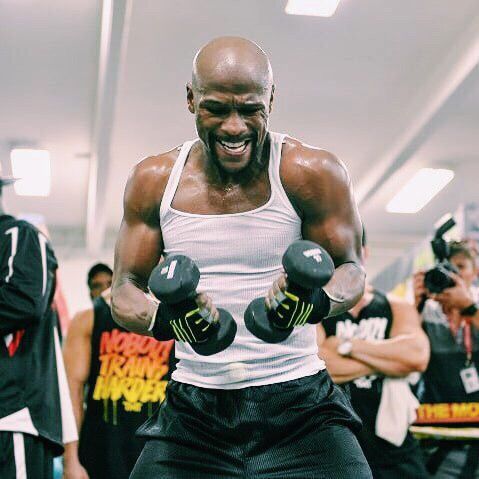
- Wake-up: 2:30 p.m. to ensure full rest, after late nights.
- Afternoon Boxing Gym Session (around 3:00 – 6:00 p.m.):
- Focus on boxing drills, sparring, and strength training.
- Post-Workout Meal: High-protein meal for recovery and energy.
- Evening Roadwork (5–8 miles):
- Steady-paced run at a comfortable rhythm, usually in the evening hours after his boxing gym session.
- Late Night:
- Wind down such as watching movies or spending time with family, staying up until early morning at around 6:00 – 7:00 a.m.
Mayweather’s general training routine is still 1-2 training sessions per day. However once his opponent and fight date was decided and scheduled, his training volume and intensity would increase. His training camp preparations were meticulous and designed to have him peak physically and mentally on fight night.
Floyd Mayweather’s Training Camp Schedule And Methods
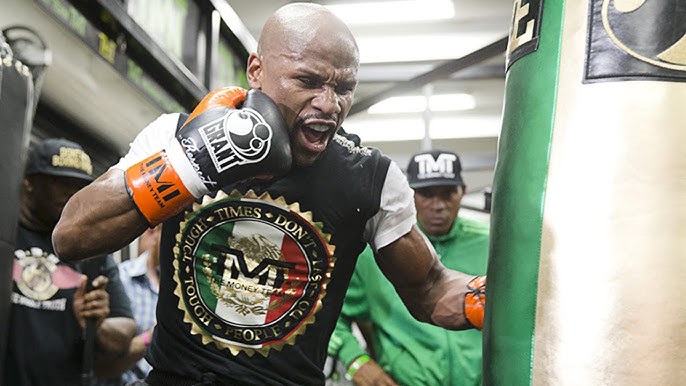
During his training camps, which typically lasted around 8 to 12 weeks, Mayweather followed a rigorous schedule designed to maximize his physical conditioning, sharpen his skills, and fine-tune his strategy. While his training routines and the specific exercises and quantities have likely changed over time, below is a breakdown of what a typical day would look like for Floyd during camp:
Morning or Late Night: Roadwork and Cardio
Mayweather is a big proponent of running or roadwork, often beginning or ending his day, before sunrise, with long-distance roadwork or sprints, to build his stamina. His running routine was about consistency and making sure he had the endurance and ability to keep going no matter what.
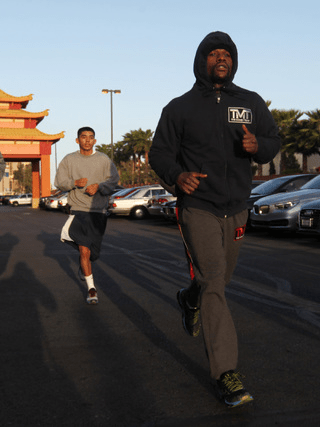
- Long-distance running (5–10 miles). Sometimes this would also include interval sprints in between long stretches. The focus here is on building cardiovascular endurance and explosive bursts, which allows him to stay sharp in the from the opening bell all the way to the later rounds of a fight.
- Floyd Mayweather: “The more miles you run, the more energy you have when the fight comes.”
Later on in his Mayweather’s career, he switched up the time of his roadwork to the late evening, after his main boxing training session, at around 10pm or even deep into the night at 3-4am, as he believed a fighter should not exert themselves completely on the road and instead use running as a tool to enhance the quality of the boxing training. The key point of Mayweather’s running routine is consistency and the ability to perform at any time of day.
Late Morning and Early Afternoon: Rest and Recovery
Mayweather would return home, after his run or gym work, to take time to rest, eat, and allow his body to recover before his next workout session. Floyd’s diet during training camp is known to be clean but not overly restrictive, focusing on lean proteins, vegetables, fruits, and hydration.
- 3:00 AM – 2:30 PM: Rest, sleep, and light breakfast.
- Recovery Work: Mayweather would often engage in light activities like swimming or stretching, which helped improve his flexibility, recovery, and cardiovascular health on his recovery days following harder training days.
Afternoon: Boxing-Specific Training
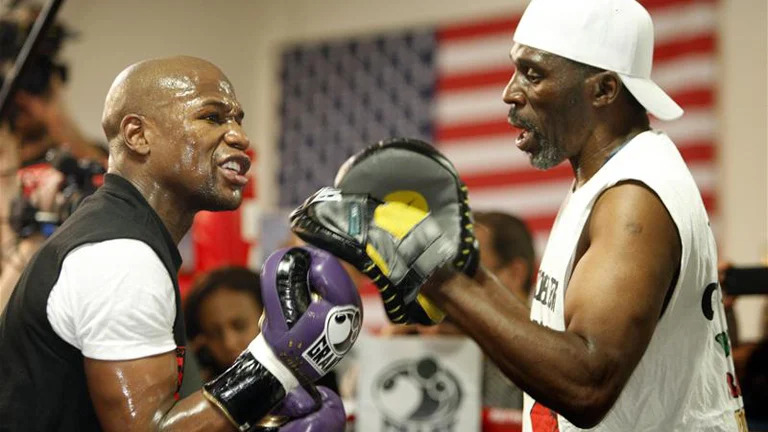
The early afternoon is when Floyd would dive into the technical part of his training. This is where he focuses on boxing skill work, timing, defence, and precision.
- Around 3pm onwards: Technical boxing session at the gym.
- Shadowboxing: Around 10–15 minutes to work on movement, form, and technique.
- Heavy Bag Work: Mayweather would spend around 7–10 rounds or more (usually straight, with no rest), working on power punches and combinations. His heavy bag work wasn’t just about throwing punches hard—it was about being precise and landing clean, consistent shots and mixing up the cadence and power.
- Speed Bag: He would spend at least 3–5 rounds or more, working on rhythm, timing, and hand-eye coordination.
- Double-End Bag: 5–7 rounds, or more, of this dynamic bag that swings back, which is used to improve reflexes, accuracy, and defensive manoeuvres.
- Pad Work with his uncle Roger Mayweather: Perhaps the most iconic part of his training, Mayweather would go through at least 5–12 rounds (straight and with no rest), of intense mitt work. This fast-paced exchange of punches and defences helped Floyd sharpen his reflexes, combinations, and timing. Floyd would also alternate this pad work with punching the ‘body shield’, a belt worn around one of his trainers, to practice punching his body shots and further enhance his power and precision.
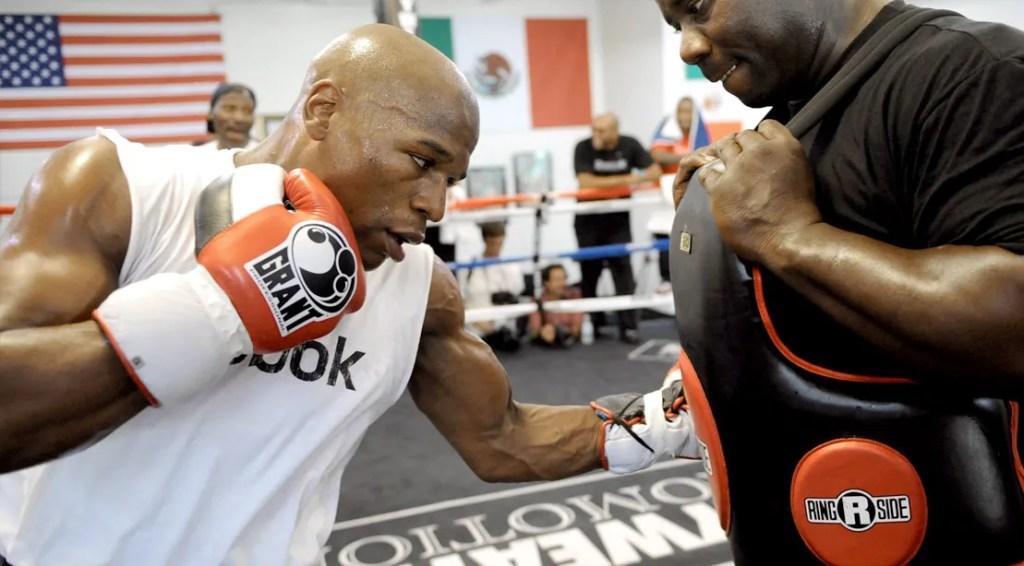
- Jump Rope: Mayweather often began and ended his sessions with jump rope work for at least 15–20 minutes, which helps with footwork, endurance, and rhythm.
- This session was all about perfecting his boxing craft. It’s where Floyd’s legendary offensive and defensive skills were developed and maintained.
- Floyd Mayweather: “I could work on pads for hours. It’s like a chess match with every punch thrown.”
Early Evening: Sparring and Conditioning

One of the most critical parts of Mayweather’s routine is his sparring sessions, which was closely guarded from cameras during his training camps and simulated real fight conditions. However, unlike many fighters, Mayweather did not engage in “all-out wars” during sparring. Instead, he focused on technical sparring and refining his tactics.
- Sparring. Sparring sessions often varied depending on the stage of camp, but Mayweather would usually spar 8 to 12 rounds, sometimes going up to 15 or more rounds toward the later stages of camp and often by the clock, with longer rounds, instead of a traditional 3 minute round, by the bell. Mayweather would spar for extended rounds, such as 15 minutes straight with limited rest. Floyd preferred to rotate through multiple sparring partners, each mimicking the style of his upcoming opponent and would spar for as long as he felt was necessary to push himself and give himself the amount of reps needed to be sharp in the ring.
- He sparred with boxers who could push his defence, footwork, and adaptability.
- Specific Sparring Focus: If his opponent was aggressive or conservative, his sparring partners would be too, helping Mayweather focus on counter-punching and defensive mastery, as well as being prepared for the specific skillset of the opponent he was going to fight.
- Around 5:30 PM – 6:30 PM: Strength and conditioning. Mayweather avoided too much heavy lifting of weights and focused more on functional strength and endurance:
- Core Work: Hundreds of sit-ups and other core exercises to strengthen his midsection. A strong core is essential in absorbing body shots and maintaining balance while throwing punches.
- Bodyweight Exercises: Floyd incorporated push-ups, pull-ups, dips, and squats. These exercises built strength without adding bulk, which helped maintain his agility and strength.
- Shadowboxing with Weights: Mayweather would often shadowbox with 1–2-pound weights in each hand, building speed and endurance in his punches.
- Neck Strengthening: Using a neck harness, Mayweather would perform neck exercises to build strength in his neck muscles, which helps absorb punches to the head.
Evening or Late Night: Additional Cardio or Recovery Work
Mayweather is known for doing late-night workouts, a testament to his unconventional work ethic. He believed that training when others were sleeping gave him an edge physically and mentally. As Floyd Mayweather said himself, ‘they say, ‘Hard work, dedication.’ That’s all it is. When the lights are off, I’m still working. While others are resting, I’m working’.
- Around 9:00 PM onwards: Late-night weights and/or cardio (optional). Mayweather would sometimes spend additional time on a stationary bike, elliptical, treadmill, weight lifting gym or go for another run, in order to maintain peak cardiovascular fitness. This late-night work helped him develop a relentless engine, making sure he could fight at full intensity for 12 rounds without tiring and develop his mental edge as while his opponents were likely sleeping, he was working.
- Basketball or Swimming: Occasionally, Mayweather would play basketball for cardio or spend time swimming as a low-impact recovery exercise.
Floyd Mayweather: “I push my body to the limit and go past that. When I’m tired, I keep going.”
Night: Rest and Recovery

After his late-night workout, Mayweather would wind down with his family, eat, rehydrate, and prepare for a night of rest following a long day of work and training. Sleep is crucial for recovery, and Mayweather ensured he got enough hours (around 8-10) to allow his body to repair and recharge.
Key Takeaways for Fighters: How to Structure Your Own Training
Here are the main things a fighter can incorporate from Floyd Mayweather’s training routines and methods:
- Consistency is King: Mayweather trained every single day, at any time of day, even when he didn’t feel like it. To quote Floyd, ‘To be the best you’ve got to work overtime’. Fighters should adopt this mindset—whether it’s cardio, technical work, or strength training, putting in consistent effort and constantly going above and beyond what is required, is essential to long term success, improvement and ultimately becoming one of the best.
- Mix Intensity and Rest: While Floyd trained harder than the competition, he also made sure he trained smarter as well and incorporated periods of and recovery into his schedule, allowing his body to recover and adapt, from intense sessions. Make sure your training includes periods of rest, sleep, and light recovery work like swimming or stretching.
- Functional Strength Over Bulk: Mayweather didn’t lift too many heavy weights and focused much more on functional exercises like push-ups, sit-ups, and bodyweight exercises. Fighters should focus on exercises that translate into useable strength, speed, agility and endurance in the ring rather than unnecessary size.
- Spar Smart: Sparring should be used as a tool to fine-tune your skills, not as an all-out fight. Focus on improving your technique, timing, and defence. Avoid unnecessary wear and tear by keeping sparring controlled and technical and only increasing the intensity to simulate a fight for a calculated period of time so, like Mayweather, you can perform in optimal condition in the actual fight.
- Cardio Is Key: Mayweather’s ability to go 12 rounds at a high pace was largely due to his extended sparring sessions combined with consistent roadwork and cardio. Fighters should prioritise sparring and incorporate long-distance runs as well as high-intensity interval training and sprints, to build both endurance, explosive power and be in the best condition possible to achieve victory.
If you want to watch more about Mayweather’s legendary training methods then watch the exclusive guide on The Sweet Scientist Youtube Channel now and level up your game.
 THE SWEET SCIENTIST
Leave a comment