
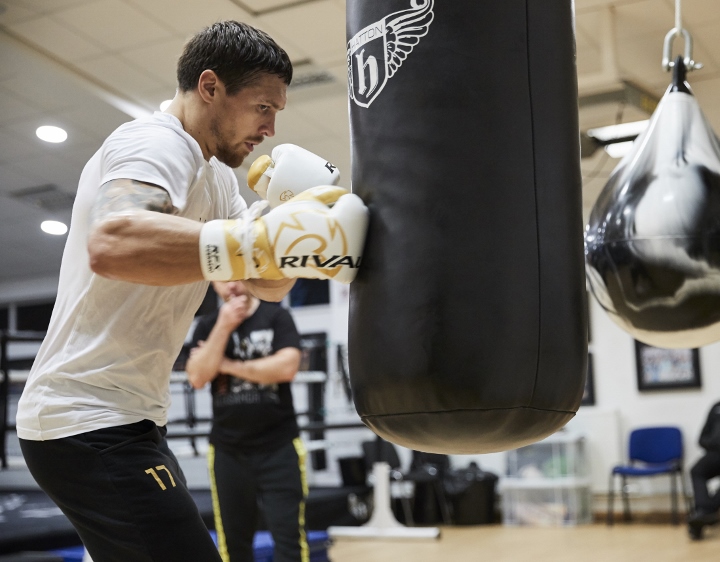
HOW TO TURN ONE OF THE OLDEST TOOLS IN COMBAT SPORTS INTO A SYSTEM FOR DEVELOPING TECHNIQUE, POWER, CONDITIONING AND FIGHT INTELLIGENCE
Walk into almost any boxing or MMA gym in the world and you will probably find a heavy bag.
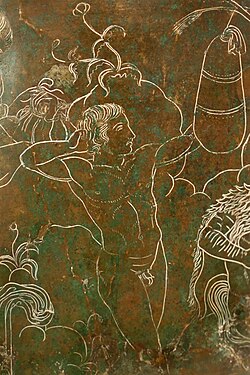
It is one of the oldest and simplest pieces of equipment in combat sports, dating as far back as some of the oldest mentions of skilled combat, during the Ancient Greek time period where boxing was practiced as pygmachia and mixed martial arts or no hold barred fighting was practiced as Pankration. The athletes of both the combat sports would refine their striking on their own version of a heavy bag known as korykos, producing evidence of the importance of bagwork as tool to generate power throughout generations of combat
Yet despite almost every fighter using or encountering one, there is an enormous difference between combat athletes just hitting a bag and actually training effectively on one.
For some fighters bagwork becomes little more than throwing combinations as hard as possible until they are exhausted.
For others, the heavy bag becomes one of the most useful technical laboratories available outside of sparring.
The difference is intention.
A heavy bag can be used to develop technique, power, balance, accuracy, combination punching, kicking, conditioning, footwork, defensive responsibility, pressure fighting and even the integration of MMA striking with wrestling and clinch work.
But only if the fighter knows what they are trying to improve.
WHY BAGWORK IS SO USEFUL
In our previous article on shadowboxing, we looked at how fighters can use completely unrestricted movement to develop coordination, rhythm and technical creativity.
Bagwork provides something different.
The bag gives you physical feedback.
That immediate feedback is one of the greatest advantages of bagwork.
It allows the fighter to begin connecting technique with actual resistance upon connection
This makes the heavy bag an important bridge between shadowboxing and live opposition.
Shadowboxing allows almost unlimited movement.
The bag adds the capacity to generate force.
Sparring adds the ability to utilize these skills in a live situation simulating the true unpredictability and consequences of a fight.
All three develop something different.
THE BIGGEST MISTAKE IN BAGWORK
One of the easiest ways to waste bagwork is to turn every round into conditioning.
The bell rings.
The fighter attacks constantly for three minutes.
Hundreds of punches are thrown.
They finish exhausted.
It feels like a great workout.
But fatigue alone does not guarantee improvement.
If the fighter spends three minutes repeating poor mechanics, dropping their hands, standing directly in front of the bag and throwing meaningless combinations, they may actually be reinforcing habits they would never want to reproduce in a fight.
The goal should therefore not always be:
How much work can I do?
A better question is:
What quality am I developing during this round?
That single change can completely transform bagwork.
Here are some of the most effective ways to actually improve utilizing the bag:
1. TECHNIQUE ROUNDS
Technical bagwork should probably make up a large percentage of training, particularly for beginners.
Instead of trying to destroy the bag, reduce the intensity slightly and concentrate on executing movements correctly.
For a boxer this could mean:
- Perfecting the jab
- Rotating correctly through the cross
- Developing the lead hook
- Returning every punch to the guard
- Maintaining stance through combinations
- Punching without overreaching
- Moving the head after combinations
For MMA the possibilities become even greater:
- Jab into low kick
- Cross into body kick
- Punch combinations into knees
- Punches into level changes
- Striking into clinch entries
- Kicks followed immediately by punches
- Switching smoothly between stances
The objective is technical quality rather than fatigue.
A beginner might spend an entire round working only the jab.
An elite fighter could spend the same round developing tiny adjustments in positioning, rhythm or combination selection.
Both are using the same bag.
The complexity simply changes with the athlete.
2. PERFECT REPETITION
Sometimes the fastest way to improve a technique is to temporarily remove variety.
Choose one movement and accumulate extremely high-quality repetitions.
For example:
Boxing
Jab only.
Or:
Jab-cross.
Or:
Lead hook-cross.
MMA
Jab-low kick.
Cross-body kick.
Rear kick into cross.
Lead hook into rear low kick.
You might perform the movement repeatedly for an entire round while making every repetition as technically clean as possible.
The purpose is targeted improvements in specific areas.
Hundreds of focused repetitions accumulated over months can create enormous technical improvement in your overall game and put you significantly ahead of both your peers and potential opponents.
3. COMBINATION DEVELOPMENT
Once individual techniques become reliable, bagwork becomes one of the easiest places to connect them.
Instead of simply memorising long combinations, build combinations that make tactical sense.
For example:
Jab → cross → lead hook
The straight punches can bring the opponent’s guard towards the centre before the hook attacks around it.
Or:
Jab → cross → rear low kick
The punches occupy the opponent’s attention before the kick attacks underneath.
Or:
Lead hook → cross → lead hook
One attack begins creating the opening for another.
The best combinations should therefore not simply look impressive.
There should be a reason why one technique leads into the next.
This is where bagwork can begin developing actual fighting patterns rather than isolated techniques.
4. POWER DEVELOPMENT
The heavy bag is probably the best commonly available striking tool for learning to transfer force into a target.
But power rounds should look different from conditioning rounds.
Maximum power requires quality.
If you throw hundreds of punches continuously, power will eventually fall as fatigue accumulates.
Instead, use shorter explosive sequences.
For example:
Throw a maximum-power cross.
Reset.
Throw it again.
Reset.
Or throw a three-strike combination with full intent before moving away and recovering.
Think of power bagwork almost like strength training.
High quality. High intent. Adequate recovery.
Recent research has even experimented with extremely short maximal heavy-bag punching intervals. One study involving elite male boxers used repeated three second all out punching efforts as a sport specific repeated sprint method and reported improvements in several measures including punching performance and anaerobic capacity.
The broader lesson is simple.
If the goal is maximum power, you do not need to turn every round into three minutes of constant punching.
Allow yourself to explode, recover and explode again.
5. FOOTWORK AND POSITIONING
One of the worst bagwork habits is planting your feet directly in front of the bag for an entire round.
Real opponents move.
Even when the bag does not, you should.
Use the bag as the centre of an imaginary fight.
Move around it.
Step outside.
Pivot.
Change direction.
Enter range.
Attack.
Exit.
Re-enter.
A simple drill is:
ENTER → COMBINATION → ANGLE → RESET
For example:
Step in with the jab.
Throw the cross-hook.
Pivot outside.
Move back into range.
Repeat.
Now bagwork starts looking much closer to fighting.
The swinging heavy bag can even become useful.
Instead of stopping the bag every time it moves, allow it to represent an opponent advancing towards you.
Move away.
Angle off.
Meet it with a jab.
Circle around it.
You have turned a limitation of the equipment into part of the drill.
6. DEFENSIVE RESPONSIBILITY
A bag will never punch you back.
That is both its biggest advantage and one of its greatest weaknesses.
Because there is no incoming threat, fighters can easily develop lazy defensive habits.
They throw multiple punches.
but then drop their hands.
Admire their work.
Reset.
In a real fight that pause can become the exact moment an opponent counters.
A simple solution is to attach defensive movement to every offensive sequence.
For example:
Jab-cross → slip
Cross-hook → roll
Combination → angle out
Punches → frame → exit
Low kick → retract → defensive stance
For MMA:
Combination → level-change defence
Punches → frame → circle
Kick → regain stance → defend imaginary counter
The defensive action does not have to be identical every time.
The important idea is that the exchange does not end simply because your attack finished.
You should remain responsible for what an opponent could theoretically do next.
7. ACCURACY TRAINING
The heavy bag is a large target.
Real openings are not.
Instead of simply trying to hit the bag anywhere, mentally divide it into targets.
Imagine:
Head.
Chin.
Temple.
Body.
Liver.
Solar plexus.
Chest.
Thigh.
For MMA you can expand the target map further.
Head kick.
Body kick.
Calf kick.
Knee to the body.
Elbow range.
Now force yourself to hit specific targets.
You can even place small pieces of tape on the bag.
Suddenly the objective changes from:
Hit the bag.
To:
Hit this exact target while remaining balanced enough to continue fighting.
That is much more useful.
8. RHYTHM AND TEMPO
Fights are not performed at one constant speed.
Good fighters change rhythm.
Slow.
Fast.
Pause.
Explode.
Reset.
Feint.
Attack again.
Bagwork is a perfect environment to develop these changes.
Instead of throwing every combination at identical speed, deliberately vary tempo.
For example:
Light jab.
Light jab.
Explosive cross-hook.
Reset.
Or:
Slow combination.
Pause.
Sudden five-strike burst.
Move.
This is especially important for advanced fighters.
At higher levels, opponents become better at reading predictable rhythm.
Developing multiple speeds makes attacks much more difficult to anticipate.
9. FEINTS AND FIGHT IQ
Feints should not disappear simply because there is no opponent standing in front of you.
Before attacking the bag, imagine how the opponent reacts.
Feint the jab.
Opponent raises their guard.
Attack the body.
Feint the level change.
Opponent lowers their hands.
Attack the head.
Show the rear kick.
Opponent braces.
Step into punches.
You are now using bagwork to practise decision chains.
This is one of the biggest differences between beginner and elite-level bagwork.
A beginner often practises movements.
An advanced fighter should increasingly practise situations.
10. PRESSURE FIGHTING
A heavy bag is also excellent for learning to maintain intelligent pressure.
Push the bag away slightly.
Allow it to swing.
Follow it while maintaining stance.
Attack as it moves.
Cut it off rather than simply following behind it.
Step laterally.
Attack from another angle.
This develops one of the most important skills in both boxing and MMA:
staying close enough to attack without becoming reckless or square.
The goal is controlled pressure.
Not chasing.
11. INSIDE FIGHTING
Many fighters only practise long-range techniques on the bag.
But the bag is equally useful at extremely close range.
Move your head beside it and work:
Short hooks.
Uppercuts.
Body punches.
Shoulder pressure.
Frames.
Forearms.
Small angle changes.
For MMA you can also practise knees and certain clinch striking positions depending on the bag.
The emphasis should remain on posture.
Inside fighting does not mean abandoning technique and swinging wildly, instead it is its own technical art and range that should be just as defensively responsible as any other fighting range in terms of both positioning and offence.
To be a truly complete fighter you must learn to generate force from extremely short distances.
12. MMA TRANSITION BAGWORK
For mixed martial artists, bagwork becomes significantly more valuable when striking is not treated as an isolated sport.
MMA constantly transitions between ranges.
Your bagwork should sometimes reflect that.
For example:
Jab → cross → level change
Throw the combination and immediately lower into a realistic wrestling stance.
Or:
Cross → lead hook → clinch entry
Hit the combination and immediately establish an imaginary body lock or underhook position around the bag.
Or:
Punches → knee → frame → exit
Or:
Low kick → cross → level change
You can even practise striking immediately after simulated wrestling movements.
Sprawl.
Recover stance.
Attack the bag.
Level change.
Rise.
Combination.
Now you are developing the ability to transition between different phases of MMA instead of training every martial art as a completely separate activity.
13. GROUND AND POUND BAGWORK
If your equipment and gym allow a suitable bag to be placed safely on the floor, it can also become a useful ground-and-pound tool.
The objective should not simply be throwing punches as quickly as possible.
Work realistic positions.
Posture.
Control.
Strike.
Reposition.
Imagine the opponent moving.
Change angle.
Return to control.
For MMA fighters, this creates another useful bridge between isolated technique and live grappling.
The bag cannot escape or counter, so it will never replace drilling with a partner.
But it allows the athlete to practise the mechanics of generating force from positions where traditional boxing mechanics change dramatically.
14. CONDITIONING ROUNDS
Bagwork can also be an extremely effective conditioning tool because the conditioning is specific to the movements used in combat sports.
Research in elite amateur boxers has found meaningful cardiovascular and metabolic demands during bag based boxing training. One comparison of three three-minute rounds of padwork and bagwork found that both created substantial physiological demand, however bagwork also produced greater mechanical loading in some measurements.
Bag work conditioning can be trained in several different ways:
STEADY TECHNICAL CONDITIONING
Work continuously for normal fight rounds.
For boxing:
3 minutes work / 1 minute rest
For MMA:
5 minutes work / 1 minute rest
Maintain sustainable output while keeping technique clean.
This develops the ability to perform skills while gradually accumulating fatigue.
INTERVAL CONDITIONING
Alternate periods of high and lower output.
For example:
20 seconds hard
20 seconds technical movement
Repeat.
Or:
10 seconds maximum attack
20 seconds controlled work
Repeat.
This begins reproducing the changing intensity of fighting.
FINISHING BURSTS
Work technically throughout the round.
Then finish the final 20 or 30 seconds at extremely high output.
This develops the ability to increase pace while already tired.
POWER ENDURANCE
Throw short explosive combinations repeatedly with limited recovery.
The objective is maintaining meaningful power as fatigue increases.
This should not become uncontrolled flailing.
Once mechanics completely collapse, the value of the drill drops dramatically.
HOW BEGINNERS SHOULD USE THE BAG
Beginners should spend most of their time developing fundamentals.
Do not worry about throwing twelve-strike combinations.
Build reliable movements first.
A simple beginner session could be:
ROUND 1
Jab only.
Focus on stance, extension and returning the hand.
ROUND 2
Jab-cross.
Focus on hip rotation and balance.
ROUND 3
Jab-cross-hook.
Maintain position throughout the combination.
ROUND 4
Attack and move.
Combination followed by a step or pivot.
ROUND 5
Technique conditioning.
Freely combine the techniques learned while remaining technically disciplined.
The main goal at this stage is to accumulate correct repetitions.
HOW INTERMEDIATE FIGHTERS SHOULD USE THE BAG
Intermediate fighters should start turning technique into situations.
Instead of only practising:
jab-cross-hook
Practise:
jab → opponent retreats → step forward → cross-hook
Or:
jab → imaginary counter → slip → cross
Or:
cross-hook → opponent covers → body attack
You are beginning to connect technique with tactical purpose.
A good intermediate session might include:
- Fundamental technique
- Combination building
- Footwork
- Defence after attacks
- Power
- Fight specific conditioning
- Specific style or opponent game planning
- Striking creativity and flow
HOW ELITE FIGHTERS SHOULD USE THE BAG
At an elite level the bag should become highly specific.
The fighter already knows how to jab.
The question is:
Which jab are they developing and why?
A range-finding jab?
A power jab?
A jab while moving backwards?
A jab into an angle?
A jab designed to draw a specific counter?
The same applies to every technique.
Elite bagwork should increasingly resemble tactical rehearsal.
If you are preparing for an aggressive opponent, practise fighting while moving backwards.
If the opponent shells behind a high guard, work attacks that manipulate that defensive shape.
If they constantly retreat, practise cutting the bag off.
If their stance creates an opening for the rear body kick, build combinations around creating that opportunity.
The bag becomes a representation of the opponent.
This is where bagwork moves beyond physical training and becomes part of fight preparation.
THE 8 ROUND SWEET SCIENTIST BAGWORK SYSTEM
For fighters looking for a simple framework, try this.
ROUND 1 — TECHNICAL WARM-UP
Light movement.
Perfect technique.
Explore range.
No unnecessary power.
ROUND 2 — PRIMARY WEAPON
Choose one important technique.
Develop it through repetition.
Jab.
Cross.
Hook.
Low kick.
Body kick.
Whatever matters most.
ROUND 3 — COMBINATIONS
Build realistic combinations around that weapon.
ROUND 4 — DEFENCE + FOOTWORK
Every attack must finish with defensive movement or repositioning.
ROUND 5 — POWER
Short explosive combinations.
Full intent.
Complete resets between attacks.
ROUND 6 — TACTICAL ROUND
Imagine a specific opponent or fighting style.
Use the bag to solve that problem.
ROUND 7 — FIGHT SIMULATION
Free work.
Feints.
Footwork.
Attacks.
Defence.
Angles.
Pressure.
Fight realistically.
ROUND 8 — CONDITIONING
Finish with a high-output round while attempting to maintain the same mechanics you had when fresh.
This gives one session multiple purposes instead of repeating essentially the same round eight times.
THE MOST IMPORTANT RULE: PRIORITIZE TECHNIQUE OVER FATIGUE
There will always be a place for hard conditioning.
Fighters need to know how to work when exhausted.
But sloppy repetitions should not become the default.
The best bagwork develops the ability to remain technically effective despite fatigue.
That distinction matters.
Anybody can become tired hitting a bag.
The goal is to become a better fighter.
BAGWORK CANNOT REPLACE SPARRING
For all its advantages, bagwork has limitations.
The bag does not think.
It does not counter.
It does not change stance.
It does not shoot a takedown.
It does not recognise your patterns.
It does not punish mistakes.
That means bagwork should never completely replace partner drilling or sparring.
Instead, think of the major training methods as different pieces of the same system.
Shadowboxing develops freedom, imagination and movement.
Bagwork develops power, mechanics and physical output.
Padwork develops interaction and coach-directed reactions.
Partner drilling develops realistic technical responses.
Sparring adds uncertainty, resistance and consequences.
Great fighters have a place and use for all of them
QUALITY BAGWORK REQUIRES IMAGINATION
Perhaps the most important lesson is that the heavy bag should not simply be viewed as a piece of equipment hanging from the ceiling.
It should represent an opponent.
When you jab, imagine their reaction.
When you step outside, understand why you are moving there.
When you slip, imagine the punch travelling past your head.
When you throw a low kick, imagine the opponent changing stance.
When you level change, imagine their hips moving backwards.
When you pressure forward, imagine them attempting to escape.
The more realistic the picture in your head becomes, the more useful solo training becomes.
FINAL THOUGHTS
Heavy bag training has survived almost every evolution in combat sports for a reason.
It is simple.
It is accessible.
And when used intelligently, it can develop an enormous number of qualities simultaneously.
But simply hitting the bag is not enough.
Every round should have a purpose.
Sometimes that purpose is improving technique.
Sometimes it is developing power.
Sometimes it is conditioning.
Sometimes it is solving tactical problems.
Sometimes it is rehearsing the exact situations you expect to encounter in competition.
The greatest value comes when these objectives are deliberately separated and then eventually brought back together.
A beginner can use the heavy bag to build their first reliable jab.
A world-class fighter can use the exact same piece of equipment to rehearse the tactical sequences that eventually decide a championship fight.
The equipment has not changed.
The intelligence behind the training has.
For fighters willing to train deliberately, bagwork still remains one of the most valuable tools available for converting technique into something that can actually be delivered with speed, power and control in a fight
 THE SWEET SCIENTIST
Leave a comment